{{ 'fb_in_app_browser_popup.desc' | translate }} {{ 'fb_in_app_browser_popup.copy_link' | translate }}
{{ 'in_app_browser_popup.desc' | translate }}
{{ childProduct.title_translations | translateModel }}
{{ getChildVariationShorthand(childProduct.child_variation) }}
{{ getSelectedItemDetail(selectedChildProduct, item).childProductName }} x {{ selectedChildProduct.quantity || 1 }}
{{ getSelectedItemDetail(selectedChildProduct, item).childVariationName }}
When you look in the mirror, do you often find yourself troubled by the black dots on your nose? No matter how recently you’ve cleaned your skin, the comedones always seem to sneak back and sometimes, the more you try to remove them, the more appear! In fact, the key to truly saying goodbye to acne lies in understanding its causes and knowing the correct way to remove it.
This article will help you understand how comedones form, the differences between blackheads and whiteheads, and share doctor-recommended methods for removing them and caring for your skin daily. The end will provide 7 tips to prevent comedones, helping you stabilize your skin from the root!
Comedones are a signal that your skin’s metabolic balance is off, usually caused by excess sebum production and the buildup of dead skin cells that block the pores.
In healthy skin, the sebaceous glands secrete an appropriate amount of oil, which exits through the pores to form a natural protective barrier. However, when the turnover of skin cells is abnormal, old keratin cannot shed properly, and new keratin keeps pushing up, the pore openings can become covered by a thick layer of dead skin. When this happens, sebum cannot escape, becoming trapped in the pore. Mixed with keratin, it gradually accumulates and eventually forms comedones.
Beyond keratin buildup, excess sebum production is another key factor in acne formation. Hot weather, hormonal changes, stress, or irregular lifestyle habits can make sebaceous glands overactive. Coupled with inadequate cleansing or the use of overly rich skincare products, pores can become clogged with excess oil and dead skin cells, causing comedones to worsen.
Comedones can be classified into two main types based on whether the pore opening is exposed to air: open comedones and closed comedones. Although both develop through similar mechanisms—namely the blockage of pores by excess sebum and keratinized cells—they differ in appearance and require different approaches to management.
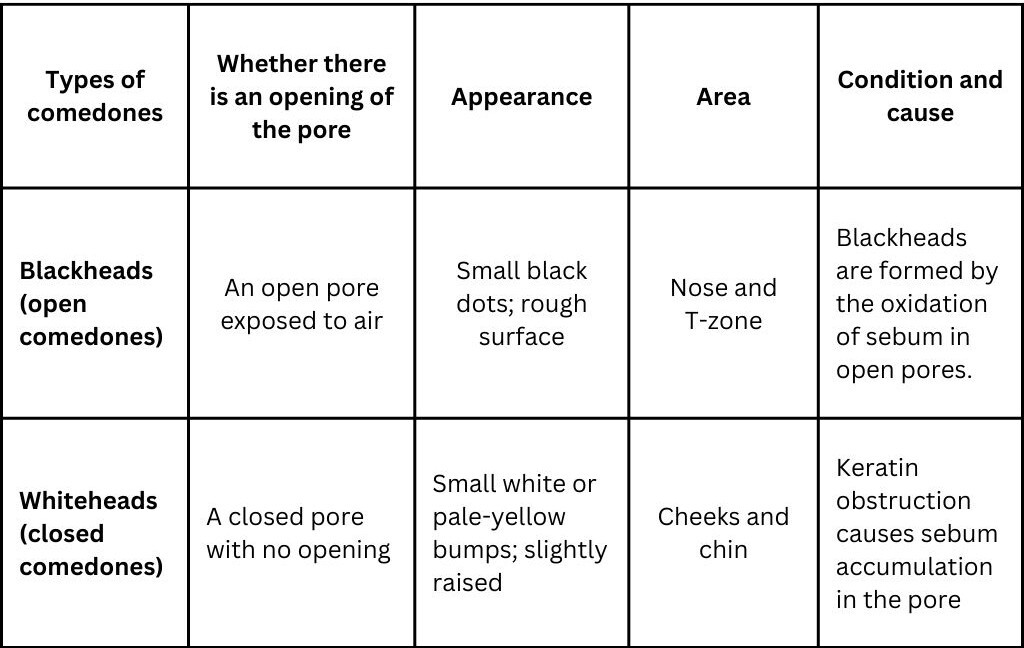
Open comedones, commonly known as blackheads, form when the pore opening remains unobstructed and comes into contact with air. When sebum becomes trapped within the pore and is exposed to oxygen, components such as melanin and impurities undergo oxidation. This process causes the surface of the plug to turn dark, giving blackheads their characteristic appearance as small black dots. They are most frequently found on areas with higher sebum production, such as the nose, forehead, and chin.
Closed comedones, also referred to as whiteheads, develop deeper within the hair follicle. In this case, the pore opening is covered by a layer of keratinized skin, preventing sebum from being expelled. As a result, small, slightly raised bumps form beneath the skin surface. Whiteheads typically appear white or yellowish to the naked eye and feel uneven or grainy to the touch. If not properly managed, the accumulation of sebum and the potential growth of bacteria can cause them to progress into inflamed acne lesions.
The following table summarizes the key differences between blackheads and whiteheads to help you more easily identify the type of comedones present.
To truly get rid of comedones, Prevention Is Key Beyond properly removing existing comedones, the most important step is preventing them from forming in the first place. The development of comedones is closely linked to daily habits, diet, and skincare routines. By paying attention to small details in your everyday life and making thoughtful adjustments, you can effectively reduce their occurrence。 Here are 7 essential tips for preventing comedones and improving your skin from the inside out:
Chronic sleep deprivation can disrupt hormone balance and sebum production, making comedones more likely to form. Aim to go to bed and wake up at consistent times each day, ensuring sufficient rest so your skin can properly repair and renew itself overnight.
Excessive stress can stimulate sebaceous glands, leading to clogged pores. Activities such as exercise, deep breathing, or listening to music can help relax both mind and body, stabilize emotions, and reduce the likelihood of developing comedones and acne.
Studies indicate that consuming too many sugary treats, fried foods, or dairy products may trigger excess sebum production, increasing the risk of clogged pores and worsening comedones. It is recommended to reduce intake of these high-glycemic and high-fat foods while incorporating natural foods rich in vitamins C and E, as well as dietary fiber, such as dark green vegetables, berries, and nuts, to support antioxidant protection and maintain a healthy oil-water balance in the skin.
Residual makeup and impurities are a major cause of clogged pores. Makeup, sunscreen, and airborne dust that are not properly removed can combine with sebum and block pores, eventually forming comedones. After daily exposure or wearing makeup, first use a gentle makeup remover to dissolve cosmetics and oil, then follow with a facial cleanser to ensure complete cleansing. This helps the skin “breathe” and reduces the chance of comedone formation.
Over time, accumulated dead skin cells can roughen the pore surface, making it easier for sebum and debris to get trapped. Periodic deep cleansing or using exfoliating acids can help reduce comedones and dullness while promoting skin renewal. For example, DR.WU MANDELIK DAILY RENEWAL SERUM 8% is an excellent choice for maintaining healthy daily exfoliation.
Selecting appropriate skincare products is crucial for addressing comedone concerns. Oily skin types can benefit from lightweight, acid-based, or oil-regulating products that help exfoliate and control sebum. Dry skin types should focus on hydration and barrier support to maintain skin stability.
Many people associate comedones solely with oiliness and neglect the importance of water. When skin lacks sufficient hydration, sebaceous glands may overcompensate by producing more oil, increasing the risk of clogged pores. In addition to drinking adequate water daily, using hydrating toners and serums can help maintain a healthy balance of moisture and oil in the skin.

DR.WU Reminder: Whether they appear as blackheads or whiteheads, both are considered early stages in the development of acne. When comedones accumulate within pores over time and are not effectively removed, or when they become affected by bacterial growth, they can easily trigger inflammation and redness, eventually progressing into acne lesions. For this reason, maintaining healthy skin turnover and following proper cleansing practices are essential for preventing breakouts and keeping the skin clear.
Acne and comedones are common skin concerns for nearly everyone, but questions often arise: how should they be treated, and how often should they be cleared? Here’s a summary of some common questions about comedone removal:
Both whiteheads and blackheads represent mild inflammatory responses in the skin. If neglected, the hormones and enzymes released by inflammatory cells can gradually damage the surrounding follicular tissue, causing comedones to grow deeper and larger. Over time, this may even stretch and enlarge the pores.
Yes! Comedones can be considered the “precursors” of pimples. When sebum and keratin block a pore, pressure on surrounding tissue can trigger inflammation. The closed environment also allows anaerobic acne-causing bacteria to proliferate, which can infect the comedone and turn it into an inflamed pimple.
The frequency of comedone removal depends on skin type and the number of comedones. For oily skin with frequent comedones, deep cleansing 1–2 times per week is recommended to keep pores clear and reduce sebum buildup. For combination or dry skin with fewer comedones, cleansing once every two weeks is sufficient to avoid over-stimulating the skin.
Pore strips work by adhering to the skin and pulling out sebum, but they mainly remove the surface oil and rarely extract comedones from the root. They cannot prevent new comedones from forming, and improper use may damage pores through repeated pulling or excessive force.
For effective comedone management, it is recommended to combine proper cleansing with acid-based skincare to promote gentle exfoliation and pore renewal. For example, DR.WU MANDELIK INTENSIVE RENEWAL SERUM 18% penetrates pores to dissolve trapped sebum, helping comedones gradually clear out in a gentle and safe way.
Addressing comedones effectively requires more than just cleansing and promoting skin turnover—it’s essential to maintain a long-term, stable skincare habit. Among the recommended methods by dermatologists, acid-based skincare stands out for its ability to gently exfoliate dead skin cells, keep pores clear, and fundamentally improve skin texture, reducing the likelihood of comedone formation.
Mandelic acid is particularly favored by dermatologists because it combines mildness with high efficacy. In recent years, it has become a preferred ingredient for both professional chemical peel treatments in clinics and at-home resurfacing routines.
Mandelic acid is an oil-soluble acid, allowing it to bind with sebum in the skin’s stratum corneum, reducing irritation. Its larger molecular size slows penetration, minimizing sensitivity while effectively breaking down accumulated dead skin cells. This helps comedones naturally clear out and stabilizes the skin’s exfoliation cycle. In addition, it brightens the complexion and improves overall skin texture.
DR.WU is the go-to choice for mandelic acid care. Developed with dermatologist-guided formulations, the pH is carefully controlled for safety and efficacy, allowing at-home resurfacing comparable to professional treatments. With long-standing popularity, top sales in Asia, and recognition such as the @Cosme skincare award, DR.WU Mandelik Series has earned consumer trust as a leading mandelic acid solution.
Long-term use helps maintain oil-water balance, stabilize skin condition, and enhance radiance. Start incorporating DR.WU Mandelik Series into your daily routine to support healthier, more resilient skin.
More Reading :
More Reading:
How to Brighten Your Skin: 5 Most Effective Whitening Methods for a Radiant Complexion
Do Vitamin C Skincare Products Really Work? Understand the 4 Key Benefits + How to Use“Vitamin C in the Morning, Retinoids at Night” for Radiant Skin
What Is Retinol and How Is It Different from Retinoic Acid? Complete Guide to 4 Key Benefits, Usage Order, and Common Q&A